Beneath the Surface:
Glen Ellyn Firefighters Train for Water Rescue
August 28, 2026

If you recently saw boats, divers, and firefighters at Lake Ellyn, there wasn’t an emergency underway. Glen Ellyn Volunteer Fire Company members were participating in a large-scale water rescue exercise with firefighters from neighboring communities.
The training brought together members of the MABAS Division 12 Water Rescue Team, a regional partnership that combines specially trained firefighters, equipment, and resources from multiple fire departments when a water emergency requires a larger response.
Leading Glen Ellyn’s water rescue training is Bret Watson, Glen Ellyn Volunteer Fire Company Safety Officer, a 22-year member of the Fire Company and longtime participant in specialized rescue training.
For Watson, exercises like this are about much more than practicing individual skills.
When a real emergency happens, firefighters from several departments may suddenly find themselves working side by side. Training together beforehand helps ensure they can arrive, understand their roles, and operate as one coordinated team.


Three Different Types of Water Rescue
Water rescue isn’t one discipline. GEVFC members train for three distinct types of emergencies, each requiring specialized skills and certifications.
Surface Rescue is used when a victim remains on top of the water. GEVFC’s inflatable rescue boat can quickly transport rescuers to someone who cannot safely reach shore.
Dive Rescue comes into play when a victim is believed to be beneath the surface. Specially trained public safety divers conduct underwater searches supported by firefighters above the water.
Swift Water Rescue prepares firefighters for moving water, including conditions that can develop during severe storms and flash flooding.
The Lake Ellyn exercise focused primarily on surface and dive rescue, with divers entering the water from boats and teams working through scenarios as if responding to an actual emergency.
Imagine Searching Underwater Without Being Able to See
One of the biggest surprises about public safety diving is just how little a diver may be able to see.
In lakes and ponds like those found throughout our area, sediment, vegetation, runoff, and debris can reduce underwater visibility to virtually zero.
A diver may literally be searching by feel. “You’re doing what you’re doing blind,” Watson explained.
That makes the team above the water every bit as important as the firefighter beneath it.
Trained public safety tenders manage lines connected to individual divers and help direct systematic searches. Communications personnel can talk with divers through specialized equipment incorporated into their masks and hoods. Sonar and other technology can help teams identify areas to search.
Incident commanders coordinate the entire operation, while boat crews and additional firefighters position equipment and stand ready to assist.
It’s a good illustration of something Watson emphasizes about water rescue: It takes a lot of people working together to succeed.

Glen Ellyn Brings Unique Capabilities to the Regional Team
That’s also why the MABAS Division 12 partnership is so valuable.
No single fire department has to provide every specialized person or piece of equipment needed for a major rescue. Participating departments contribute different capabilities, creating a much larger collection of resources that can be called upon throughout the region.
GEVFC contributes trained divers, tenders, and other water rescue personnel, along with its inflatable rescue boat.
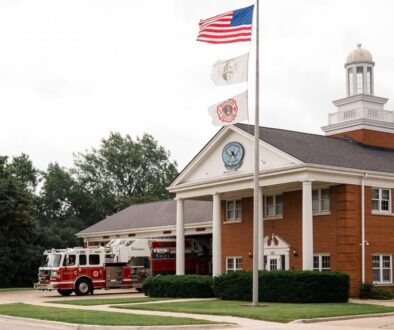
Glen Ellyn also brings an unusual resource to the team through its Heavy Rescue Squad (pictured above).
The Squad can connect to specialized equipment that provides divers with a continuous supply of breathing air from the surface. Rather than depending solely on the finite air supply carried in a traditional scuba cylinder, divers can receive breathing air through a hose connected to a surface manifold.
It is a capability Glen Ellyn uniquely contributes to the Division 12 Water Rescue Team.
Other regional resources can include additional boats, sonar, underwater communications, drones, and remotely operated underwater equipment.
When needed, those assets can be brought together for one mission.
When someone is submerged, every second matters.

Why Train Together?
The types of emergencies requiring these resources are relatively uncommon—and everyone hopes they stay that way.
But they happen.
A vehicle can leave a roadway and enter the water. A boat can capsize. A swimmer can disappear beneath the surface. A child can enter a pond. Severe weather can produce flooding and rapidly moving water.
When someone is submerged, every second matters.
That’s why Division 12 teams don’t wait for an emergency to figure out how they’ll work together.
During exercises like the one at Lake Ellyn, firefighters establish objectives, assemble personnel and equipment, conduct rescue evolutions, and then debrief. Crews discuss what worked, identify problems, and make adjustments before beginning the next evolution.
Those details matter because a real emergency isn’t the time to learn how another department operates.
The goal is for firefighters from multiple agencies to arrive already prepared to function as a larger team.
For Glen Ellyn, the partnership works both ways. GEVFC’s specialized personnel and equipment can assist neighboring communities when they need help. When a significant emergency occurs here, those neighboring departments and their specialized resources can come to Glen Ellyn.
That’s mutual aid in action.
“Get rescuers into the water as quickly as possible. Locate the victim. Bring them to the surface. Save a life.”

An Investment That Reaches Beyond Glen Ellyn
For Watson, water rescue is also part of a much larger commitment.
He has been a Glen Ellyn volunteer firefighter for more than 22 years, balancing the Fire Company with a career that once required extensive international travel and with raising a family. Like other GEVFC members, he has had to find ways to make training, emergency calls, work, and family coexist.
What has kept him involved?
The challenge. The camaraderie. Staying active and engaged. And, most importantly, the opportunity to contribute to his community.
Specialized teams take that commitment another step.
GEVFC members who participate in water rescue dedicate additional time to training and maintaining skills they may rarely be called upon to use. They train not only with fellow Glen Ellyn firefighters, but regularly with firefighters throughout MABAS Division 12.
They contribute their time. Glen Ellyn contributes specialized equipment. Together, participating departments contribute their knowledge and capabilities to something larger than any one fire company.
The result is a cooperative emergency-response system that makes Glen Ellyn safer while helping protect our neighbors throughout the region.
Beneath all the equipment, training, and coordination, Watson says the mission is remarkably simple:
Get rescuers into the water as quickly as possible. Locate the victim. Bring them to the surface. Save a life.
It’s another way Glen Ellyn’s volunteer firefighters invest their time, energy, and training—not only to answer the call here at home, but to be ready whenever one of our neighbors needs help.